There are bands you listen to, bands you respect, & then there are bands that become part of your DNA. Madball is firmly in that third category.
For nearly four decades, the New York hardcore institution has been a permanent fixture in a scene that has changed dramatically around them. Fashion has changed. Venues have disappeared. Scenes have fractured and reformed. Entire generations of hardcore kids have grown up, grown old and handed the microphone to the next generation.
Yet Madball remains. Still angry, still sincere, still ridiculously heavy & still capable of walking into a venue and making an audience collectively lose its mind.
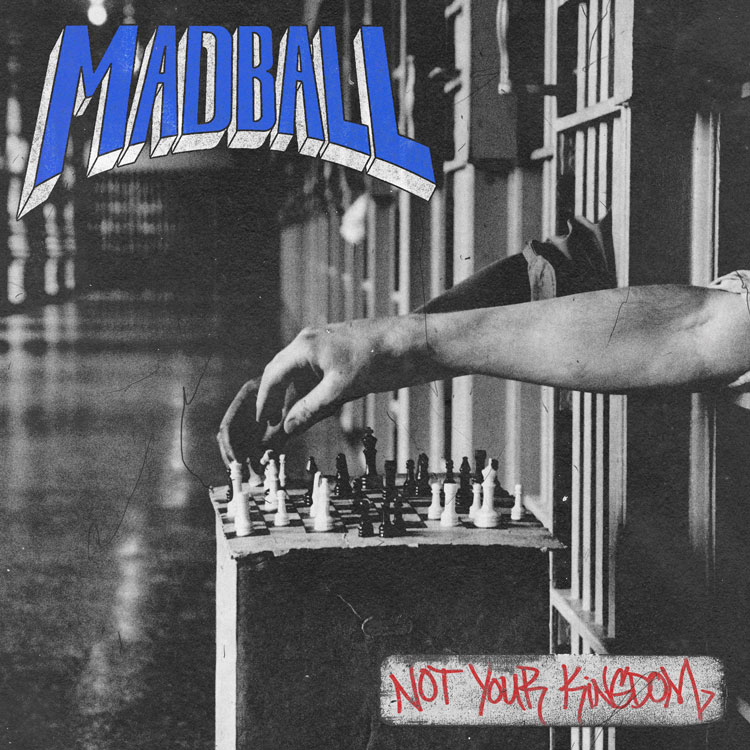
Now, with “Not Your Kingdom”, Madball return with their tenth studio album, released through Nuclear Blast, and deliver a record that feels both deeply connected to their past and surprisingly conscious of the present.
This is not simply another Madball album. This is Madball taking stock & the result is one of the band’s most interesting records in years.
And if you’re expecting “Set It Off” part two, you’re going to be disappointed. If you’re expecting Madball to sound exactly like they did in 1996, you’re going to be disappointed.
If you’re expecting a band who have been doing this for almost 40 years to somehow remain frozen in time, you’re probably listening to hardcore for the wrong reasons. Because Madball has never been about nostalgia; they’ve been about survival…
And “Not Your Kingdom” is a record that understands exactly what that means.
To understand Madball, you have to understand New York hardcore. And to understand New York hardcore, you have to understand the family tree.
Madball began life in 1988 as something of an Agnostic Front offshoot, with a young Freddy “Madball” Cricien, the younger half-brother of Agnostic Front legend Roger Miret. He stepped onto the microphone and became part of the scene that would eventually define his life.
What started as a side project developed into something much bigger.
Madball became one of the bands that helped carry the NYHC sound from the late ’80s into the ’90s and beyond. Alongside the likes of Agnostic Front, Sick Of It All, Biohazard, and later generations of New York hardcore bands, Madball helped establish a blueprint centred on groove, aggression, attitude, and community.
Then came “Set It Off”. Released in 1994, “Set It Off” wasn’t simply another hardcore record. It was a statement of intent. It was the sound of a band taking the aggression and street-level intensity of NYHC and sharpening it into something brutally memorable.
“Demonstrating My Style” followed in 1996, further cementing the band’s reputation. Then came “Look My Way” and “Hold It Down”, albums that demonstrated that Madball weren’t content to repeat themselves. The riffs became bigger. The songwriting became more confident. The production evolved. The band’s relationship with metal became increasingly apparent.
And that evolution continued. “Legacy”, “Infiltrate the System”, “Empire”, “Hardcore Lives”, “For the Cause”. Each album represents a different point in the band’s development, but the central DNA remained intact.
Groove, Power, Attitude & Brotherhood. That is what makes Madball such an important band. They didn’t just survive NYHC. They became one of its defining voices. And their influence can be heard everywhere.
As one recent assessment of the band’s legacy put it, Madball have effectively become a definitive New York hardcore act, with their influence extending into the heavier strains of hardcore that followed.
But “Not Your Kingdom” isn’t interested in simply reminding us about the past. It’s interesting what happens when you’ve survived it.
The first single, “Rebel Kids”, is arguably the perfect introduction to the album. Interestingly, it was also the first song written for the record, with Freddy Cricien explaining that it had been completed around two years before the album’s release and eventually became the catalyst for everything that followed.
Musically, it is classic Madball. The groove hits immediately. The guitars have that familiar metallic crunch. Freddy sounds like Freddy.
And yet there’s something else happening underneath the aggression.
“Rebel Kids” is about generations. It’s about questioning.
It’s about refusing to accept the world simply because somebody tells you that’s the way it is. “Rebel kids don’t follow trends.” It’s a sentiment that could have been written in 1994. But it also feels painfully relevant in 2026.
The irony is that Madball themselves are now the old guard. The band who once represented the new generation are now looking at a hardcore scene where people who weren’t even born when “Set It Off” was released are wearing Madball shirts and starting bands of their own.
And that’s where the song becomes more than another hardcore anthem.
It’s a passing of the torch. Not a surrender. Madball isn’t stepping aside.
They’re acknowledging that the next generation is here. And that’s a powerful thing.
Musically, “Not Your Kingdom” sounds enormous. The album was tracked at The Boneyard Studios in Nashville, Tennessee, a location that might seem slightly removed from the concrete streets of New York that have defined so much of Madball’s identity.
But perhaps that’s the point. The production team of Andrew Baylis, Aiden Thompson and Grady Saxman have captured the band’s familiar aggression while giving the record enough room to breathe. Lee Rouse handled the final mixing and mastering, while additional interludes were recorded at Chop Shop Studios by Jeff “Stress” Davis and Chuck Treece.
The Nashville connection is particularly interesting. Madball are a New York band through and through. But “Not Your Kingdom” doesn’t sound like a band trapped inside a time capsule. It sounds modern.
The guitars are heavy without becoming overproduced. The drums have plenty of impact, and crucially, the groove remains king. Because that’s what Madball does better than almost anybody: they make hardcore that moves.
The album opens with “Tethered”, and it’s immediately apparent that this isn’t going to be a record built around speed alone. This is groove-heavy NYHC. The kind of track that makes you involuntarily start moving your head.
The kind of track that will turn a festival crowd into a human demolition site. Cricien has described the song as one of the last pieces written for the album, despite its position as the opening track, and it has a nostalgic quality that deliberately transports the listener back to the band’s ’90s heyday while still sounding like a contemporary Madball song.
It’s an incredibly effective opener. Then comes “Flammable”. At under a minute, it’s an absolute bastard of a track. Short, Violent, Gone. There is no fat on it—no unnecessary bullshit.
It’s Madball reducing hardcore to its most primitive form: riff, rhythm, aggression and attitude. “Rebelude” follows, and this is where things start getting interesting. The presence of Chuck Treece and Jeff “Stress” Davis on the album’s interlude material adds another texture to the record.
Rather than simply blasting through fourteen tracks of identical hardcore, Madball have created breathing spaces. They’re brief, but they’re important because contrast makes the heavy moments hit harder.
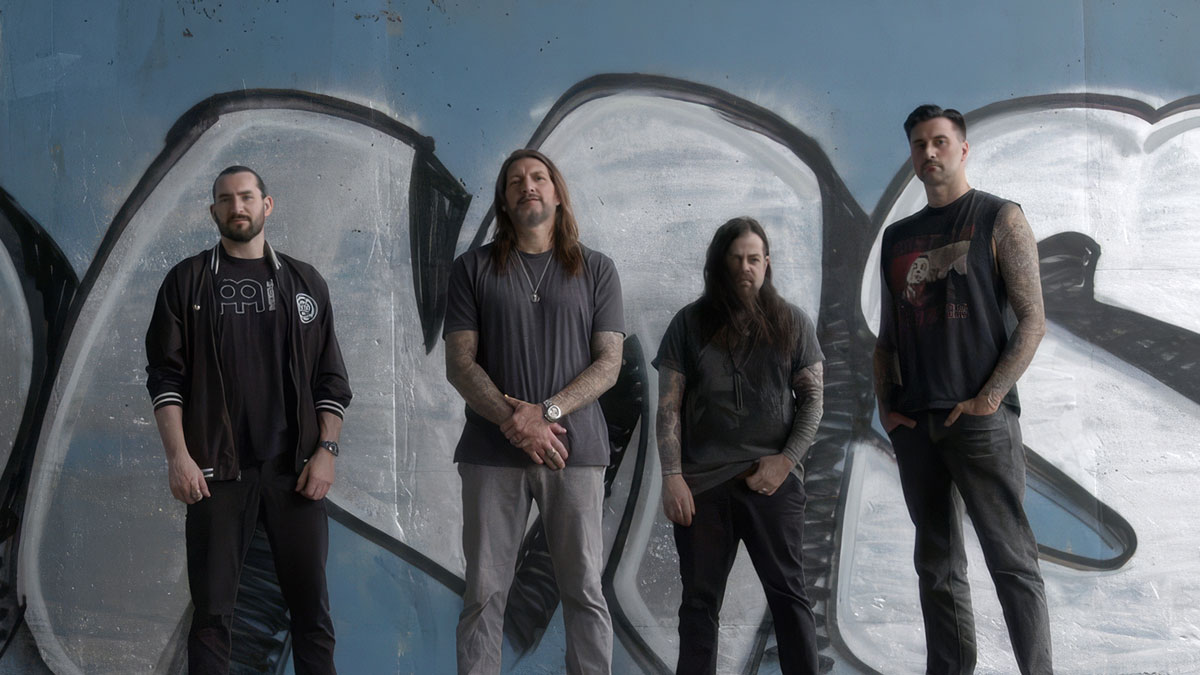
The current Madball lineup is Freddy Cricien on vocals, Mike Gurnari on guitar, Mike Justian on drums and Paul “Paulie” Delaney (Kill Your Idols, Black Anvil) on bass.
That lineup represents another chapter in the band’s long history.
Gurnari has now been part of Madball for around seven years, while Justian has been behind the kit for approximately fifteen. Delaney’s arrival on bass follows the departure of longtime bassist Jorge “Hoya Roc” Guerra, making this a significant moment in the band’s history. Cricien has described Delaney as someone who had already been part of the band’s wider rotation and was effectively family, making the transition feel organic rather than disruptive. And that’s important.
Because Hoya was Madball’s bass player, his bass playing was fundamental to the band’s sound. His presence was part of the visual identity. Part of the mythology & part of the family.
Losing somebody like that could easily destabilise a band. But “Not Your Kingdom” doesn’t sound destabilised. It sounds hungry.
That’s perhaps the biggest compliment you can give the new lineup.
There is no sense in Madball trying to prove that they can survive without Hoya. They’ve continued. And that’s exactly what hardcore bands do. They survive.
“Don’t MisStep” is another short, sharp blast that keeps the album moving before “What Say You” delivers one of the record’s most significant lyrical moments. The title “Not Your Kingdom” comes directly from the lyric:
“You hold the keys, but it’s not your kingdom.” And suddenly the entire album makes sense. This is not a record about Madball claiming ownership. It’s almost the opposite. The world is chaotic. Political &
Economic issues… Nobody really knows who is pulling the strings.
Cricien’s lyrics have always had an element of confrontation, but there is something more reflective here. The man who once screamed about street survival is now looking at the world around him and asking bigger questions. That doesn’t mean Madball has become a political punk philosopher. Thank fuck for that. They’re still Madball.
But there’s a greater awareness of the world beyond the mosh pit.
And that makes “Not Your Kingdom” feel like the work of a band who have grown older without growing complacent.
Then comes “Stab Wounds”. And fuck me, this is HEAVY!
This is where the metallic side of Madball comes crashing through the door. There has always been metal in the band’s DNA, but “Stab Wounds” feels like one of the clearest examples of how that influence has developed over time. The riffs are heavier. The atmosphere is darker. The groove remains, but there’s more menace.
It’s a track that demonstrates exactly why Madball’s influence extends far beyond traditional NYHC.
You can draw a straight line from “Set It Off” to the modern metallic hardcore movement. And “Stab Wounds” sounds like Madball looking at that evolution and saying: “Yeah. We helped build this.”
“Sunrise” provides another brief change of pace before “Life’s a Mural” arrives with a more melodic edge. This is one of the album’s strengths.
Madball knows when to hit you. They also know when not to. “Life’s a Mural” has a melody without becoming soft. It’s catchy without becoming commercial.
And the songwriting demonstrates that Madball has become increasingly comfortable with the idea that hardcore can be aggressive and accessible at the same time. That’s something the band has been doing for years.
But here, it feels particularly polished.
If there’s one phrase that could summarise Madball’s entire career, it’s “Family First”. The band’s history is built on relationships. Blood relatives & Hardcore brothers/sisters—people who have stood beside one another for decades.
The song carries that philosophy into the album’s centre. And in the context of Hoya’s departure, it takes on another layer.
Madball has lost members before. They’ve broken up, reformed, changed labels & line-ups. But the family remains. That is the legacy.
“Clockwork” is another fascinating inclusion. The song carries a connection to New York hardcore history that feels appropriate given the album’s wider themes. This is where Madball demonstrates their understanding of lineage. They know where they came from. They know who influenced them.
And they know that the scene they helped build doesn’t exist in isolation.
Every generation steals something from the one before. Every generation adds something new. That’s how hardcore survives.
“The Ride” brings back the groove and serves as another reminder that Madball has always understood the importance of a chorus.
This is hardcore designed for the audience. The kind of song where Freddy points the microphone towards the crowd, and thousands of people suddenly become the vocalist.
And then comes “Chase a Dream”—the closer.
It’s a fitting ending because the entire album has essentially been about the same thing. Continuing, surviving, refusing to stop.
The temptation when discussing a band like Madball is to focus entirely on the past. To talk about “Set It Off” or “Hold It Down”. And yes, those records deserve their legendary status.
But Madball’s legacy isn’t simply that they made great hardcore records in the ’90s. Their legacy is that they never stopped.
They kept touring & they kept releasing music. They kept evolving, which helped them continue to play to younger audiences.
They kept connecting generations. That matters.
Because hardcore is obsessed with authenticity.
Madball have had nearly forty years to fuck it up & they haven’t.
“Not Your Kingdom” proves that.
The record doesn’t attempt to outdo its past; it doesn’t need to.
Instead, it asks a more interesting question: What does Madball sound like now?
The answer is a band that still has the groove. Still has aggression.
Still has the attitude but now has decades of experience behind it.
And that experience counts for something.
“Not Your Kingdom” is the sound of a band who have earned the right to be reflective.
It’s amazing to see a band with their legacy still sincere, still pissed off & still heavy. And while the kingdom might belong to somebody else, Madball has already built their own empire.
They don’t need the crown. They’ve got their own legacy….
Review: Joseph Mitchell
Not Your Kingdom is out via Nuclear Blast Records on 24th July 2026