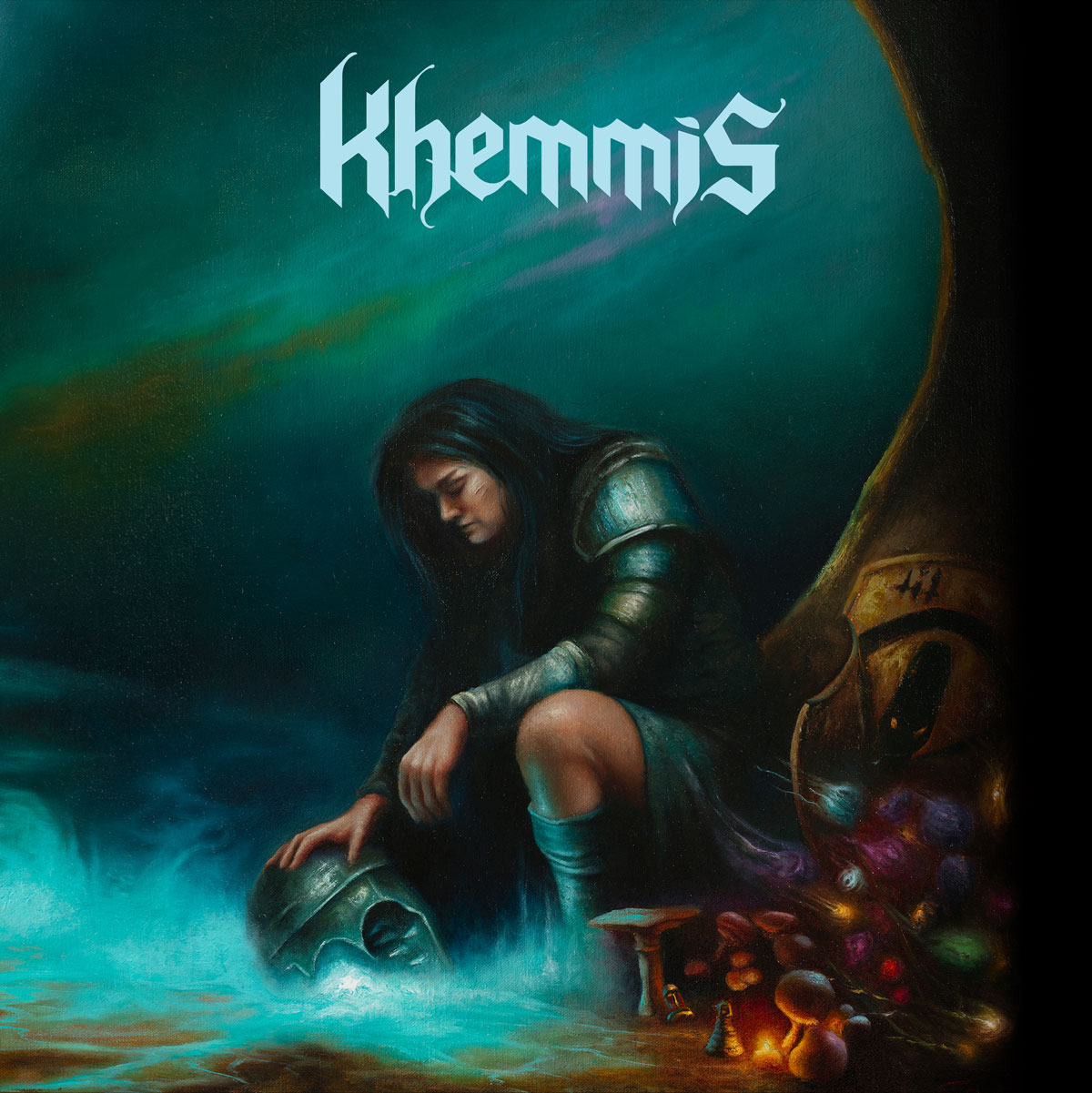
There comes a point in every great metal band’s career when the question is no longer whether they can write another excellent record, but whether they can continue to evolve without losing the identity that made them special in the first place. For Denver heavyweights Khemmis, that challenge arrives in the form of their fifth full-length release, “Khemmis”, a self-titled statement that feels less like a reinvention and more like a declaration of purpose.
Following the acclaimed “Deceiver” (2021), the quartet of Ben Hutcherson (guitar, vocals), Phil Pendergast (guitar, vocals), David Small (bass), and Zach Coleman (drums) have delivered an album that strips away excess and refocuses on the core elements that made them one of the most respected bands in modern doom metal. The band themselves described the record as a celebration of heavy metal and the joy of creating it, while maintaining the darkness that has always defined their sound.
Since emerging with “Absolution” in 2015 and following it with the genre-defining “Hunted”, Khemmis have occupied a unique space within heavy music. They have never been purely a doom band. Equally, they have never been a traditional heavy metal act. Instead, they inhabit the fertile ground between epic doom, classic heavy metal, sludge, and melodic hard rock. Their sound owes obvious debts to Black Sabbath, Candlemass, Thin Lizzy, and Iron Maiden, while filtering those influences through a distinctly modern lens.
What immediately stands out on Khemmis is its energy. Opener “Invocation of the Dreamer” arrives like a battering ram. Rather than easing listeners into the experience with a slow-burning doom crawl, the band launches into galloping rhythms, harmonised lead guitars, and one of the most infectious choruses they have written in years. The song demonstrates everything Khemmis does well. massive riffs, dynamic vocal interplay between Hutcherson and Pendergast, and an instinctive understanding of how melody can elevate heaviness rather than dilute it. The arrangement constantly shifts between aggression and grandeur, refusing to settle into predictable patterns.
“Corpsebloom Garden” is followed by leaning deeper into the band’s doom roots. The song unfolds patiently, allowing thick guitar layers to establish atmosphere before opening into soaring melodic passages. Here, Khemmis demonstrate their mastery of tension and release. The verses feel oppressive and claustrophobic, while the choruses explode into expansive melodic territory. It is a songwriting approach they have refined since “Hunted”, but one that feels particularly focused on this album.
“Grief’s Reverie” showcases another key strength, the band’s pacing.
Many modern doom bands struggle to justify extended song lengths, relying on repetition rather than development. Khemmis avoids that trap entirely. Themes evolve naturally, riffs transform rather than repeat, and transitions feel earned. The track gradually builds from mournful introspection into triumphant catharsis, embodying the emotional duality that has become one of the band’s trademarks.
The album’s midpoint may be its strongest stretch. “Beneath the Scythe” and “Gilded Chambers” reveal a band increasingly comfortable incorporating traditional heavy metal structures into their doom framework. Twin-guitar harmonies recall the classic approach of Thin Lizzy and Iron Maiden, yet the crushing weight beneath those melodies remains unmistakably Khemmis. Rather than treating melody and heaviness as opposing forces, the band fuses them into a single emotional language.
Production also deserves praise. Since the early days of “Absolution”, Khemmis have steadily expanded the scale of their recordings. On “Khemmis”, the guitars sound enormous without becoming muddy, while the rhythm section maintains clarity even during the densest arrangements. Coleman’s drumming is particularly effective throughout, balancing restraint with explosive moments of intensity. Small’s bass work adds depth and movement beneath the towering guitar harmonies.
“Tomb of Roses” serves as one of the album’s emotional centrepieces. The song highlights the vocal contrast between Hutcherson and Pendergast, a dynamic that has become increasingly important to the band’s identity. Pendergast’s cleaner melodic approach evokes yearning and vulnerability, while Hutcherson’s harsher delivery introduces tension and urgency. Together, they create an emotional range few bands within the doom genre can match.
“Carrion King” arguably delivers the album’s heaviest material. Built around monolithic riffs and crushing rhythmic momentum, it recalls moments from “Desolation” and “Deceiver” while maintaining the more direct songwriting philosophy that defines this record. The arrangement never loses sight of the hook, ensuring that the song remains memorable long after the final chord fades.
The closing track “Benediction Tones” provides a fitting conclusion. Rather than ending in despair, the album finishes with a sense of hard-earned resolution. The song gathers together many of the record’s recurring themes, melodic grandeur, emotional weight, and crushing heaviness and presents them in one final statement of intent.
What makes “Khemmis” successful is how confidently it embraces the band’s entire history. “Absolution” introduced the formula. “Hunted” refined it into something approaching modern doom perfection. “Desolation” expanded the melodic dimension. While “Deceiver” pushed into darker and more aggressive territory. This self-titled release feels like the synthesis of all those eras.
Among metal fans, Khemmis have long been regarded as one of the genre’s most consistent and distinctive voices. And ultimately, “Khemmis” succeeds because it understands exactly what makes the band special. It is heavy without becoming oppressive, melodic without becoming soft, and ambitious without becoming self-indulgent. The record captures four musicians who are fully confident in their identities while still finding new ways to challenge themselves.
In an era where many bands chase trends or reinvent themselves for reinvention’s sake, Khemmis have chosen a different path. They have looked inward, distilled their strengths, and produced one of the most complete statements of their career. Whether you’re a long-time follower since “Absolution” or a newcomer discovering them through this self-titled release, “Khemmis” stands as a powerful reminder of why this band remains one of modern metal’s finest achievements.
Review: Joseph Mitchell
Khemmis is out via Nuclear Blast on 12th June 2026
| 01 – Invocation of the Dreamer | ||
| 02 – Corpsebloom Garden | ||
| 03 – Grief’s Reverie | ||
| 04 – Beneath the Scythe | ||
| 05 – Gilded Chambers | ||
| 06 – Tomb of Roses | ||
| 07 – Carrion King | ||
| 08 – Benediction Tones |