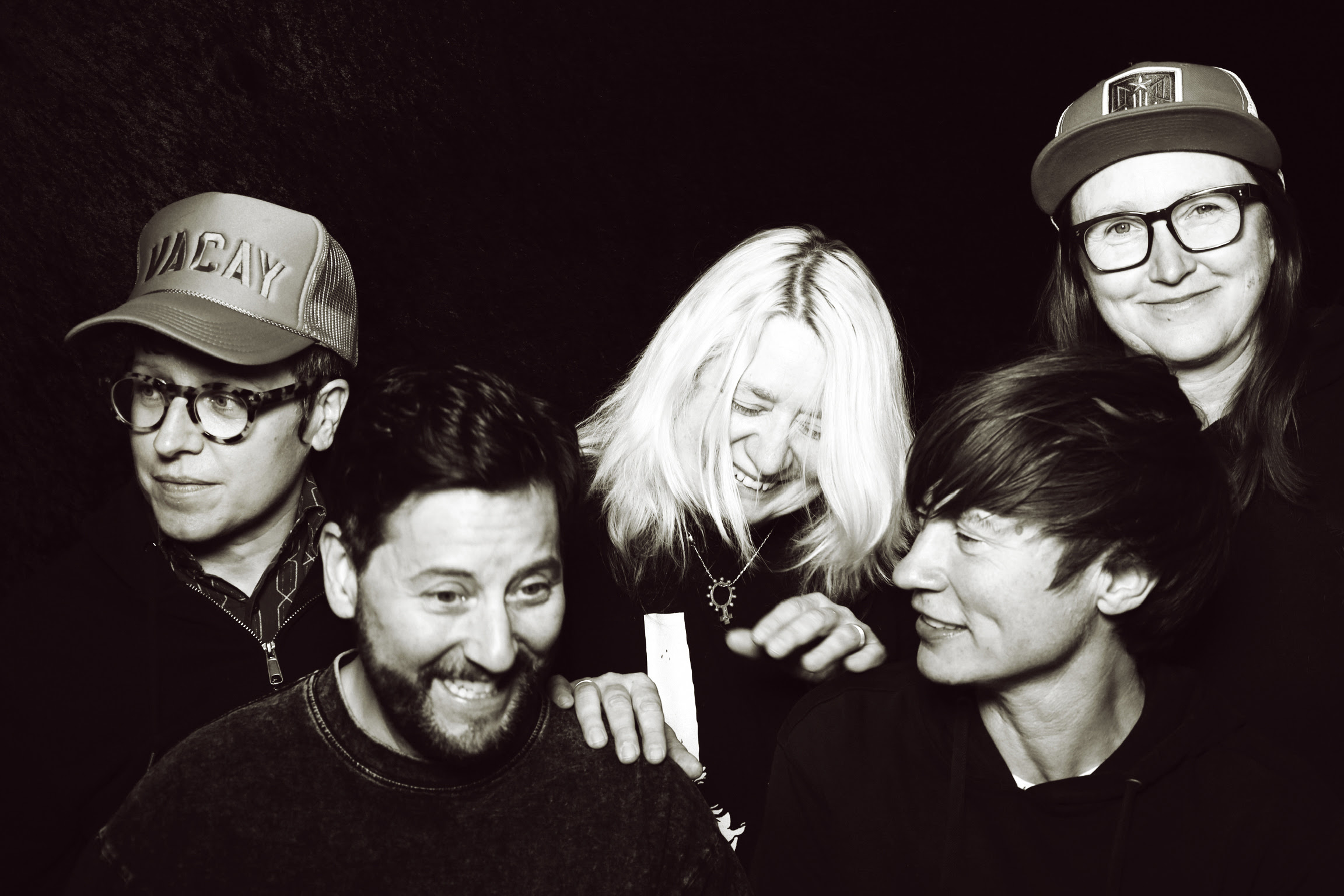
Originally formed in 1993 in Portland, Oregon, back when it was still an under-the-radar postindustrial midsized city, where an artist could still live in a punk house for $200 a month—maybe less if you claimed a closet as your room—Jody Bleyle lived in one such house in SE Portland where she hosted the band’s earliest practices, with Kaia Wilson on guitar and vocals, Donna Dresch on guitar and bass, and Jody on vocals and drums. Before long, Jody moved over to guitar and bass as well, and the band found a kindred queer spirit in drummer Marcéo Martinez, who played on the band’s first full-length release, ‘Personal Best’ (1995). Marcéo took a break from the band for their 1996 second album, ‘Captain My Captain,’ which featured east-coast hard-hitter Melissa York on drums. Today, the band is a power 5-piece with both Marcéo and Melissa in their respective drummer’s seats.
Most people think early ’90s Pacific NW music and they think grunge, riot grrrl, Sub Pop records, and yes Donna shredded in Screaming Trees and Dinosaur Jr., and Jody played in Sub Pop’s Hazel, and Adickdid (Kaia), Calamity Jane (Marcéo), and Vitapup (Melissa) were sometimes considered Riot Grrrl-adjacent. But those are labels, not sounds, and what Team Dresch sounded like was melodic shredding, emo desperation, pop bliss, the fight and the fallout, the fantasy and the future, a real future that could hold all of it.
There was a time when the way you found out if a queer you’d just met was “your kind” of queer was by asking if they listened to Team Dresch. It was 1993, it was 2001, it was, let’s be honest, last week, and what you were really asking was: Are you weird? Are you pissed-off? Do you want to make out with your (real or desired) girlfriend in public, and do you hate the Xtian Right? Team Dresch are legendary because they were being THAT queer and THAT pissed and courageous and THAT loud at a time when young queer punks had few other cultural lifelines. And they remain legendary because, more than three decades later, they’re still going strong.
Even though Team Dresch was always for the queers, they were also always for everyone. Or, for anyone who felt themselves held and reflected in, in the words of former Washington Post music critic Chris Richards, their “heroic loudness”. When Rolling stone recently named Personal Best one of the ‘Greatest Punk Albums of All Time’, they were recognizing that the power of their music transcended the specificity of the band’s queer identity, even as it remained proudly rooted in it.
At their shows last year celebrating the 30th anniversary of Personal Best, the ardent audacity of that sentiment still reverberated. They played to venues packed with old fans, and kids of those fans, and new young fans who had found their way there through some alchemy of internet and identification, the open-secret path to radical queer culture. Today that path is as important as ever—and we’re so lucky to find Team Dresch’s new album ‘Furthermore,’ their first in three decades, awaiting us on it.