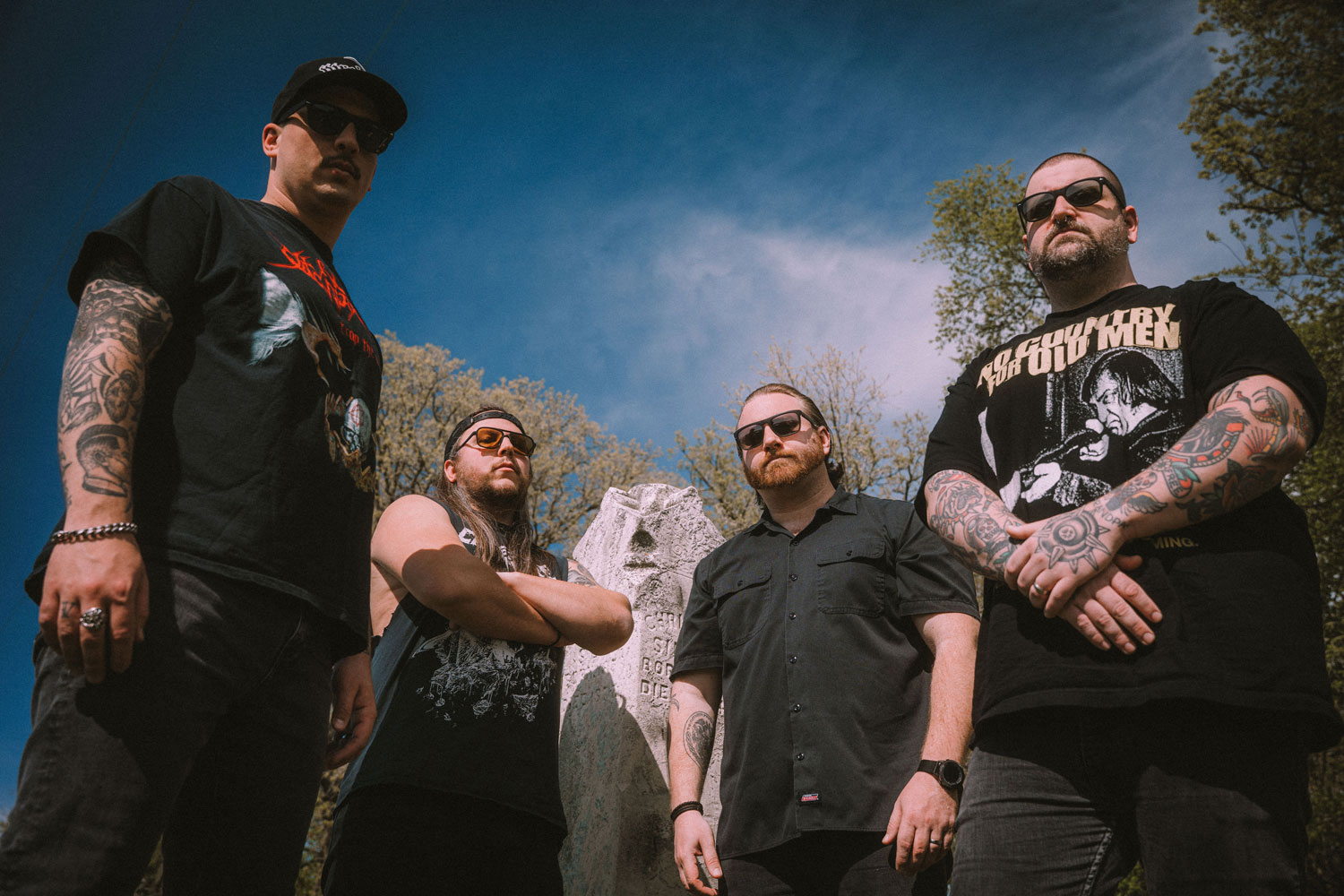
Indiana’s Wraith have spent the last decade establishing themselves as one of the most exciting names in the modern blackened thrash and speed metal underground. What began as a solo project in 2016 has evolved into a formidable four-piece, building a reputation on ferocious riffs, relentless pacing and a healthy disregard for unnecessary musical frills. With “Descent Into Darkness”, their sixth full-length release, Wraith take the foundations of their established sound and push them into considerably darker territory.
Across previous releases, including their self-titled debut in 2017, “Heed The Warning” (2018), “Absolute Power” (2019), “Undo The Chains” (2021) and 2024’s “Fueled By Fear”, the band have steadily refined their combination of old-school thrash, speed metal and blackened aggression. Their work has attracted attention across the metal underground, while festival appearances such as Dynamo and tours alongside Exciter and Midnight have helped establish their reputation as a particularly savage live proposition.
Now signed to Prosthetic Records, Wraith returns with an album inspired by the First World War, exploring the brutality of conflict, the experiences of ordinary soldiers, and the political circumstances that lead humanity toward destruction. Frontman Matt Sokol’s interest in history, unsurprisingly, provides much of the conceptual foundation, but this isn’t an album that gets bogged down in storytelling at the expense of its music. Instead, the historical subject matter provides an appropriately bleak backdrop for ten tracks of furious, blackened thrash.
And make no mistake, Wraith haven’t come back to play nicely
The album opens with its title track, ‘Descent Into Darkness’, setting the atmosphere for what follows. A sense of impending disaster runs through the record, with Wraith leaning into the darker side of their sound rather than simply delivering ten variations of the same thrash-metal assault. The guitars have a nasty, abrasive edge, the rhythm section provides a relentless foundation, and the overall production gives everything a suitably imposing presence.
Recorded with co-producer CJ Rayson, the album benefits from a sound that is powerful without becoming overly polished. The guitars are thick and cutting, the bass has a welcome presence beneath the riffs, and the drums retain enough natural aggression to give the music an almost live-in-the-room intensity. There is a noticeable balance between the band’s punk-inspired rawness and the more technically focused elements of their thrash songwriting.
‘Final Warning’ is an absolute highlight and one of the album’s most immediate statements of intent. The track explodes into life with pummelling drums and razor-sharp guitar riffs, while Sokol’s vocals deliver their lines with a vicious, almost snarling urgency. The chorus refrain is particularly effective, delivering a memorable hook without sacrificing any aggression. As the song develops, the band introduces a crushing breakdown before launching into a frantic closing guitar solo. It’s a fantastic demonstration of Wraith’s ability to combine old-school thrash intensity with modern extreme-metal weight.
There are obvious echoes of early Testament, Venom, and Motörhead in the band’s musical DNA, but Wraith have enough personality to keep their influences from becoming a crutch. Their songwriting is direct, aggressive and built around riffs that actually stick with you.
‘Over The Top’ is another particularly strong moment, drawing on the terrifying experience of soldiers leaving their trenches and advancing into battle. Musically, it demonstrates some of the album’s most interesting dynamic changes. The band moves between slower, more ominous passages and explosive bursts of speed, creating tension that mirrors the subject matter. The guitars alternate between tightly constructed thrash riffs and more traditional heavy-metal lead work, while the drums shift effortlessly between pounding mid-tempo passages and full-throttle acceleration.
This willingness to shift pace gives the album much of its character. Wraith understands that relentless speed is only effective when there is something heavier and more oppressive to contrast it against.
‘Lord Of Wolves’ takes things in a particularly sinister direction. The blackened elements of Wraith’s sound become more prominent, with darker guitar melodies and a heavier atmosphere giving the track a distinctly unsettling character. There is a real sense of menace within the riffing, while the rhythm section keeps everything moving with an almost militaristic precision. It’s one of the strongest examples of the album’s darker identity and shows that Wraith can create atmosphere without losing their trademark aggression.
‘No Man’s Land’ provides another interesting change of pace. Rather than relying entirely on breakneck speed, the band adopted a slower, more oppressive approach. The heavier guitar passages feel particularly effective here, allowing the riffs to carry considerably more weight. The arrangement has a claustrophobic quality, almost as though the listener is being dragged through the mud and devastation of the battlefield itself. The track’s slower sections make the faster passages that much more effective when they arrive.
The closing ‘Back In The Trenches’ provides an appropriate conclusion to the album’s wartime narrative. Rather than ending on an overly triumphant note, Wraith maintains the bleak atmosphere that has characterised much of the record. The songwriting brings together the different elements explored throughout the album: aggressive thrash riffing, darker melodic touches, pounding percussion and a strong sense of forward momentum. It feels like a fitting final chapter to a record concerned with the human cost of conflict.
The performances throughout deserve considerable recognition.
Matt Sokol is the driving force behind Wraith, handling vocals and guitar duties with an impressive combination of aggression and conviction. His vocal delivery is rough, abrasive and perfectly suited to the material. There’s a distinctly punk-inspired quality to his approach, which prevents the vocals from becoming overly theatrical or technically showy. His guitar work is equally important, balancing muscular rhythm playing with sharp lead passages and melodic flourishes.
Jason Schultz provides the additional guitar work, and the chemistry between the two guitarists is a significant part of what makes the album work. Their playing complements one another rather than competing for attention, with the rhythm sections remaining tight and focused while the lead work adds colour and movement. The solos are particularly effective because they serve the songs rather than simply becoming opportunities for technical displays.
Chris Petkus provides a solid bass performance, giving the music a substantial low-end foundation. His backing vocals also help reinforce the more aggressive sections, adding another layer to the band’s overall attack. Meanwhile, Mike Szymendera is an absolute powerhouse behind the kit. His drumming is relentless without becoming monotonous, switching between rapid-fire thrash patterns, double-bass passages and heavier, more deliberate rhythms. His precision is particularly impressive considering the speed at which much of this material operates.
Together, the four musicians sound like a band that understands exactly what it wants to achieve.
What makes Descent Into Darkness particularly enjoyable is its refusal to overcomplicate things. Wraith aren’t trying to reinvent thrash metal or add unnecessary progressive elements to their songwriting. Instead, they take the foundations of classic speed metal and crossover thrash, introduce a healthy dose of blackened aggression and deliver it with enough conviction to make the results genuinely exciting.
The First World War concept also adds an extra layer of depth. Rather than simply using warfare as an excuse for aggressive imagery, Sokol explores the experiences of ordinary people caught up in extraordinary circumstances, giving the music a darker emotional undercurrent.
There are occasional moments where the album’s commitment to relentless aggression threatens to make some arrangements feel familiar, but changes in tempo, strong guitar work, and atmospheric passages keep things interesting throughout.
Following the success of Fueled By Fear, Wraith have delivered another thoroughly enjoyable collection of blackened thrash that demonstrates both their consistency and their willingness to develop their sound.
“Descent Into Darkness” is an uncompromising, riff-heavy assault that combines the spirit of old-school thrash with a darker, more contemporary edge. Wraith are building serious momentum, and this record should do absolutely nothing to slow them down.
Review: Joseph Mitchell
Descent Into Darkness is out via Prosthetic Records on 13th November 2026
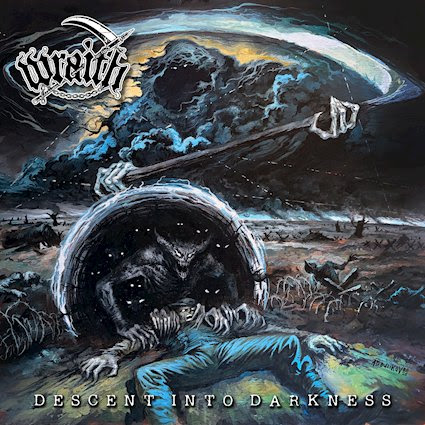
TRACKLIST:
- Descent Into Darkness
- Final Warning
- Atomic Queen
- Terminal Embrace
- Over the Top
- Misery and Malice
- Lord of Wolves
- Chainscraper
- No Man’s Land
- Back in the Trenches
WRAITH ARE:
Matt Sokol – vocals, guitar
Jason Schultz – guitar
Chris Petkus – bass
Mike Szymendera – drums