MAWIZA Summon the Storm with New Video for “Ngulutu”

MAWIZA

Summon the Storm with New Video

for “Ngulutu”

Chilean Grammy Winners featured by Rolling StoneRevolverDecibelMetal HammerBandcampTidalTEDx + more

“I love Mawiza! For their music, for who they are as individuals and for what they stand for.” – Joe Duplantier (Gojira)

Facebook iconShare
X iconShare
Email iconForward
Mawiza - Ngulutu (Official Music Video)

Mawiza – Ngulutu (Official Music Video)

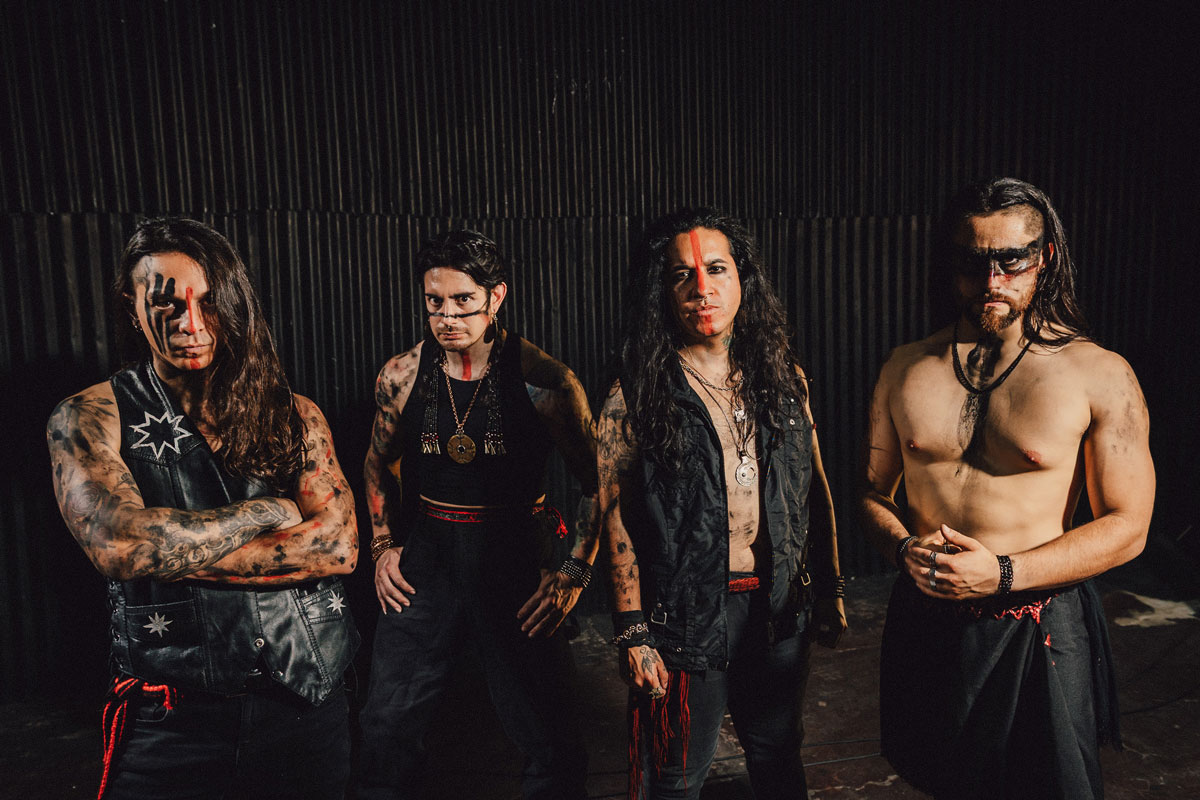
After taking the world by storm last year with their new album ÜLMawiza are beating the drum for indigenous metal even louder in 2026. The modern day Mapuche warriors paid a visit to Gojira frontman Joe Duplantier’s Silver Chord Studio and performed to a packed house in Santiago before taking the stage alongside Mr. Bungle and Avenged Sevenfold.

[…]they use heavy music as a megaphone to scream about their pride in their customs and their hatred of colonialism”, Metal Hammer wrote in naming Mawiza the most important new metal band of 2025.

Today, Mawiza are releasing a new video for the most fierce and combative song off ÜL. While at one with the forces of groove metal, “Ngulutu” (The Western Storm) declares war on encroaching urban decay.

In Mapuzugun, ‘Ngulutu’ comes from Ngulu, which means West”, Mawiza’s vocalist and guitarist Awka says. “The song refers to an abysmal storm born in the turbulent Pacific Ocean that reaches the land in the form of bursting, shattered clouds. It’s a declaration of war on the so-called progress of large cities, merging ourselves as a single entity with nature”.

Watch the video for “Ngulutu”: https://youtu.be/4YKRpCSpH5k

ÜL is available now on  Season of Mist.  

Order & Stream: https://orcd.co/mawizaul

Mawiza wrote “Ngulutu” six years ago in response to a social uprising in Chile, but the source material that inspired the latest single from ÜL dates as far back as the 16th century. “Both historical records and our oral tradition remember the ancient Mapuche war toki Michimolongko, who, together with his kona and weychafe, managed to destroy  Santiago in 1541”, Awka recalls. “This song is a tribute to those ancient warriors and to the power of the natural territory that lies beneath the city”.

While the torrential groove of “Ngulutu” is bound to churn the pit when Mawiza storm the stage at Midgardsblot this summer, the band draws its strength from their ancestral land. The song’s chorus calls on the spirits of the Mapocho and Maipo Rivers with surging, shark-like riffs and drums that beat with the unrelenting force of a tidal wave. “Müley taiñ amuleal / Fewla, fey llemay (We must keep moving forward / Now it shall be done!)”, Awka chants, summoning a breakdown that brings the most towering cities crumbling into ruin.

The two rivers named in the chorus of ‘Ngulutu’ are both vital for life in the territory and even for the lives of city dwellers”, Awka explains. “Yet when it rains enough, the rivers overflow, causing the collapse of the urban order. It reminds us that nature is an active entity that cannot be tamed, one that sets the path we must follow as Mapuche people”.

The video for “Ngulutu” was directed by Andrés Hetzler.

Additional Video Credits:

Producers – Awka Mondaka, Andrés Hetzler

Cinematography – Soledad Gatica

Lighting – Pedro Salgado

Gaffer – Simón Jorquera

Photos by © Kenia Catiollo (@bluemphasis)

Tracklist:

1. Wingkawnoam (3:38)

2. Pinhza Ñi pewma  (4:29)

3. Ngulutu (3:50)

4. Nawelkünuwnge  (5:06)

5. Mamüll Reke  (4:24)

6. Wenu Weychan (6:13)

7. Lhan Antü (4:08)

8. Kalli Lhayay (3:58)

9. Ti Inan Paw-Pawkan (featuring Joe Duplantier from Gojira) (4:42)
Full runtime: 40:30

Origin: Wallmapu, Mapuche Nation

Style: Indigenous Groove Metal

FFO: Gojira, Soulfly, The Hu

Photo by © Kenia Catiollo (@bluemphasis)

ÜL means “chant” in Mapuzugun. The album represents the voice of the land, the origin of feeling, the first call to connect with emotions. It is the materialization of a part of the spirit that, for a few seconds, becomes one with the wind—a force we can hear, resonate, communicate with, and return to. ÜL is Mawiza’s indigenous chant, and like smoke, it rises as a message to the skies.

Like their Mapuche ancestors, Mawiza always look back. ÜL chants to awaken the energies that have fallen asleep in the land, using the power of the great cities to resist the noise of imbalance. In this way, the album becomes another element of nature, a force defending itself, speaking in its own language to keep fighting and condemning those who continue to futilely subjugate their own strength.

With ÜL, Mawiza present themself to the world with a decolonizing and empowering mission. The album proclaims that nature possesses consciousness and spirit. Opening song “Wingkawnoam” emphasizes the importance of indigenous Mapuche thought by following dreams as precise guides for one’s path in life.

“Pinhza ñi pewma” is a dream that Mawiza’s vocalist Awka had during a time when hummingbirds were nowhere to be seen. Their chant was absent and the chilco plant was disappearing. In Awka’s dream, four hummingbirds came to feed on the blood from his fingertips, as if it were nectar flowing from the flowers of the chilco.

ÜL pays tribute to nature and Mawiza’s ancestors. “Ngulutu” recalls ancient battles between the Mapuche and the Spanish in Santiago, Chile. “Mamüll Reke”, “Wenu Weychan”, “Lhan Antü”, and “Kalli Lhayay” are filled with rhythms and sounds reminiscent of the most hermetic rituals of the Mapuche people. They were used by shamans to induce trance and heal the sick, to communicate with and greet the spirits of the mountains.

Closing song “Ti Inan Paw-pawkan” features chants from members of Mawiza’s indigenous community, as well as Gojira frontman Joe Duplantier. It is here, during the album’s finale, that the band stake their claim as both indigenous and urban. The song acknowledges the mission entrusted to Mawiza by Mapuche authorities and by the land itself: to raise awareness about balance on Earth in an empowered way and to call for greater attentiveness to Mapuche territory. Otherwise, the consequences will be dire.

Lineup:
Awka – Lead vocals & rhythm guitar
Karü – Lead guitar & backing vocals
Zewü – Bass & backing vocals
Txalkan – Drums & percussion

Guest Musicians:
Fabiola Hidalgo (Liquen) contributes vocals to “Wingkawnoam”, “Pinhza Ñi pewma”, “Ngulutu” and “Mamüll reke”

Joe Duplantier (Gojira) contributes vocals to “Ti Inan Paw-Pawkan”

Recording Studio:
Estudio del Sur in Chile

Producer:
Pancho Arenas

Sound & Mixing Engineer:
Pancho Arenas

Mastering Studio:
West West Side Music

Mastering Engineer:
Alan Douches

Cover Art:
Kata Ulloa

Order & Stream: https://orcd.co/mawizaul

Follow Mawiza:
Bandcamp: https://mawizakvlt.bandcamp.com
Instagram: https://www.instagram.com/mawizakvlt
Facebook: https://www.facebook.com/mawizakvlt
TikTok: https://www.tiktok.com/@mawizakvlt
Spotify: https://open.spotify.com/artist/4oJP24bXA2fbdVmNGNmCtt
YouTube: https://www.youtube.com/@mawizakvlt
Apple: https://music.apple.com/artist/mawiza/165343595
Mawiza - Band Logo